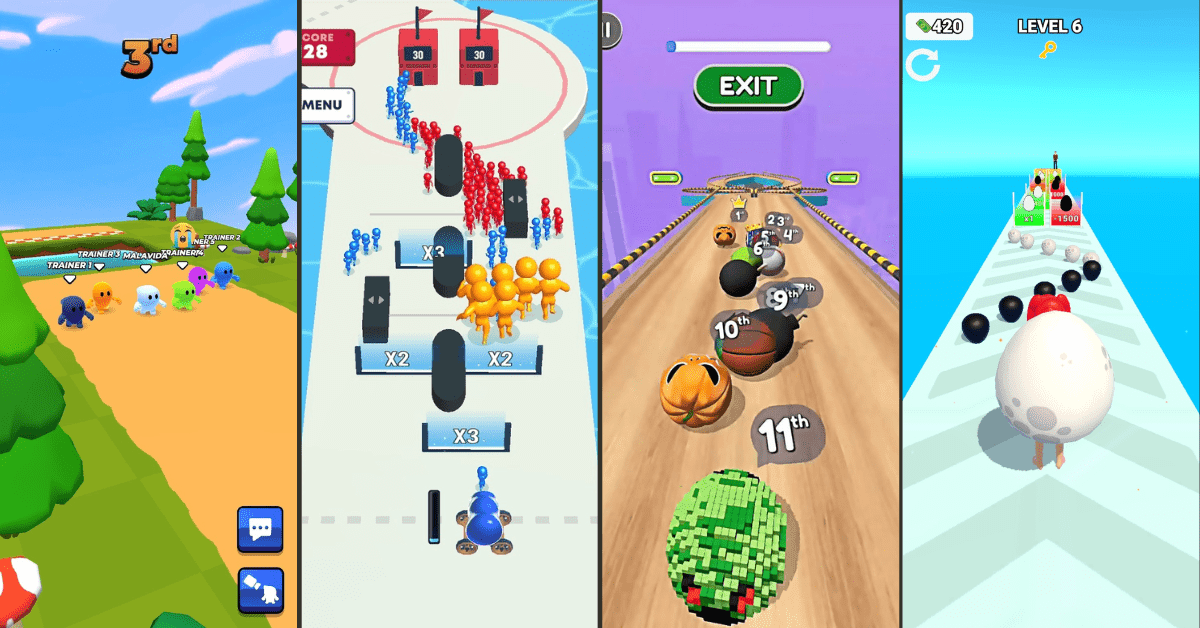
The hyper-casual mobile gaming market—characterized by instant accessibility, minimalist mechanics, and short play sessions—faces a critical challenge: dismal retention rates. With D7 retention often below 10% and players drowning in a sea of interchangeable titles, differentiation is paramount. Enter artificial intelligence. No longer confined to AAA RPGs or simulation games, AI is revolutionizing hyper-casual experiences by transforming generic tap-and-swipe mechanics into deeply personalized journeys. Here’s how intelligent algorithms are reshaping this $12B+ sector:
🤔 1. Dynamic Difficulty Adjustment: The “Invisible Hand” Guiding Engagement
Hyper-casual games thrive on the “one more try” loop, but balancing frustration and boredom is delicate. AI solves this by analyzing player behavior in real-time:
- Skill-Based Scaling: Algorithms track metrics like failure points, reaction times, and success rates. If a player repeatedly misses jumps in a runner game, AI subtly reduces obstacle density or extends timing windows. Conversely, for experts, it introduces unpredictable elements (e.g., shifting enemy patterns) to maintain challenge15.
- Emotional Resonance: Tools like affective computing (via front-facing cameras) detect player frustration or boredom, triggering AI to inject power-ups or simplify sequences. Color Block Jam uses this to delay ads during high-stress moments, boosting session length by 40%4.
- Procedural Micro-Levels: Instead of static stages, AI generates bite-sized levels tailored to player competence. Screwdom’s puzzles adapt complexity based on completion speed, ensuring 90-second sessions feel “winnable yet demanding”4.
🎨 2. Personalized Content & Aesthetic Customization
AI moves beyond gameplay to curate bespoke sensory experiences:
- Visual & Audio Tailoring: By analyzing device settings, time of day, and play history, AI adjusts UI themes (e.g., dark mode at night) and soundscapes. Dream Lashes dynamically amplifies ASMR hair-cutting sounds for players who linger on cosmetic interactions, deepening immersion48.
- Generative Asset Creation: Local AI models (like those in Maze AI) enable real-time asset generation. Players sketching a custom avatar in High Heels! 2025 trigger GANs to render HD accessories, transforming static customization into collaborative creation79.
- Contextual Theming: AI cross-references location data with cultural trends. A player in Tokyo might see cherry-blossom-themed obstacles, while one in Brazil gets Carnival-inspired power-ups—no manual reskins required5.
🧠 3. Predictive Monetization & Ethical Retention
Hyper-casual monetization traditionally relies on intrusive ads. AI refines this into a value-exchange model:
- Reward Timing Intelligence: Machine learning predicts “drop-off points” (e.g., after three failures). Instead of forced interstitials, AI offers a rewarded video before quit intent, providing boosts that feel earned, not extorted4.
- Personalized Ad Economies: Analyzing play patterns, AI serves hyper-relevant rewarded ads. A puzzle-game enthusiast might see ads for Color Block Jam, while a runner fan gets High Heels! promos. Mob Control’s “Skip Its” tokens—letting paying users bypass ads but keep rewards—boosted IAP revenue by 27%4.
- Addiction Safeguards: To address ethical concerns (echoing Flappy Bird’s legacy), AI nudges breaks after detecting extended sessions. All in Hole uses heartbeat data (via wearables) to pause gameplay during stress spikes1.
⚙️ 4. Hybrid-Casual Evolution: AI as a Bridge to Depth
The line between hyper-casual and hybrid-casual blurs as AI layers “light depth” onto simple cores:
- Procedural Narrative Snippets: SLMs (Small Language Models) generate micro-stories for idle games. In Office Fever, AI creates unique employee backstories (“Janice hates Mondays—help her find coffee!”), turning mindless tapping into empathetic engagement26.
- AI-Driven Social Mechanics: NPCs powered by lightweight local models (like NVIDIA’s Avatar Cloud Engine) enable dynamic rivalries. In Sky Hotel!, AI “guests” remember player choices, demanding preferred room service in future runs10.
- Behavioral Cloning for Async PvP: AI studies a player’s tactics (e.g., aggressive vs. strategic) and clones their style for friends to compete against offline—keeping communities active beyond launch6.
🔮 5. The Future: Localized AI & Cross-Platform Personas
Emerging technologies are set to deepen personalization:
- Edge Computing for Zero-Latency AI: Local AI models (optimized for Snapdragon 8 Gen 4) process data on-device, enabling real-time personalization without cloud dependency. This allows Block Jam 3D to adjust physics puzzles based on device tilt sensitivity5.
- Unified Player Profiles: AI curates cross-game personas. A player’s preference for precision in Screwdom informs High Heels! to prioritize balance challenges over speed trials, creating a cohesive identity across titles39.
- Generative Challenge Mods: Players can voice-request custom modes (“Make this level icy!”). Tools like ChatGPT-5 generate modifiers instantly, turning passive consumers into co-designers9.
⚖️ The Ethical Imperative: Beyond Engagement
While AI personalizes, it risks manipulation. Leading studios now prioritize:
- Transparent Data Use: Clear opt-ins for biometric/behavioral tracking, with anonymized aggregation1.
- Algorithmic Diversity Guards: Preventing filter bubbles by introducing “serendipity mechanics”—randomly inserting content outside predicted preferences to broaden discovery5.
💎 Conclusion: The Hyper-Personalized Era
AI in hyper-casual games is no longer a luxury—it’s the cornerstone of survival in a saturated market. By transforming generic interactions into emotionally resonant, adaptive experiences, AI turns fleeting engagements into enduring relationships. As KRAFTON’s CTO noted: “The future isn’t just about simplicity—it’s about smart simplicity. AI is the silent puppeteer making every tap feel uniquely yours.”26. For developers, this means leveraging AI not as a buzzword, but as an empathetic toolkit that respects players while relentlessly optimizing joy. The result? Games that don’t just kill time—but understand it. 🚀