
The hyper-casual mobile game genre, defined by its instant accessibility and minimalist design, has undergone a radical transformation since its breakout moment with Flappy Bird in 2013. This evolution reflects shifts in player expectations, technological advancements, and innovative monetization strategies. Let’s explore how core mechanics have adapted—and where they’re headed.
💡 Phase 1: The Flappy Bird Era (2013–2017) – Simplicity as Revolution
Flappy Bird’s 2013 explosion was no accident. Its mechanics distilled hyper-casual design to pure essence:
- One-Tap Gameplay: Players tapped to navigate a bird through pipes. Failure meant instant restart—no tutorials, no menus28.
- Brutal Difficulty: High stakes created addictive frustration. Players averaged 60+ daily retries, driven by the “one more try” loop5.
- Passive Monetization: With daily ad revenues hitting $50,000, it proved hyper-casual could monetize through ads without in-app purchases210.
Yet, its downfall was emblematic: Creator Dong Nguyen removed it, fearing its addictive nature harmed players5. This highlighted a core tension—simplicity risked shallow retention.
⚙️ Phase 2: Hybridization (2018–2023) – Depth Meets Accessibility
As competition grew, developers confronted hyper-casual’s Achilles’ heel: dismal retention. D7 rates languished below 10%, far below the mobile average of 20%4. The solution? Injecting depth without complexity:
- Meta-Progression Systems:
Games like Tangle Master 3D added pet systems and light RPG elements, rewarding repeated play with unlocks4. - Social Competition:
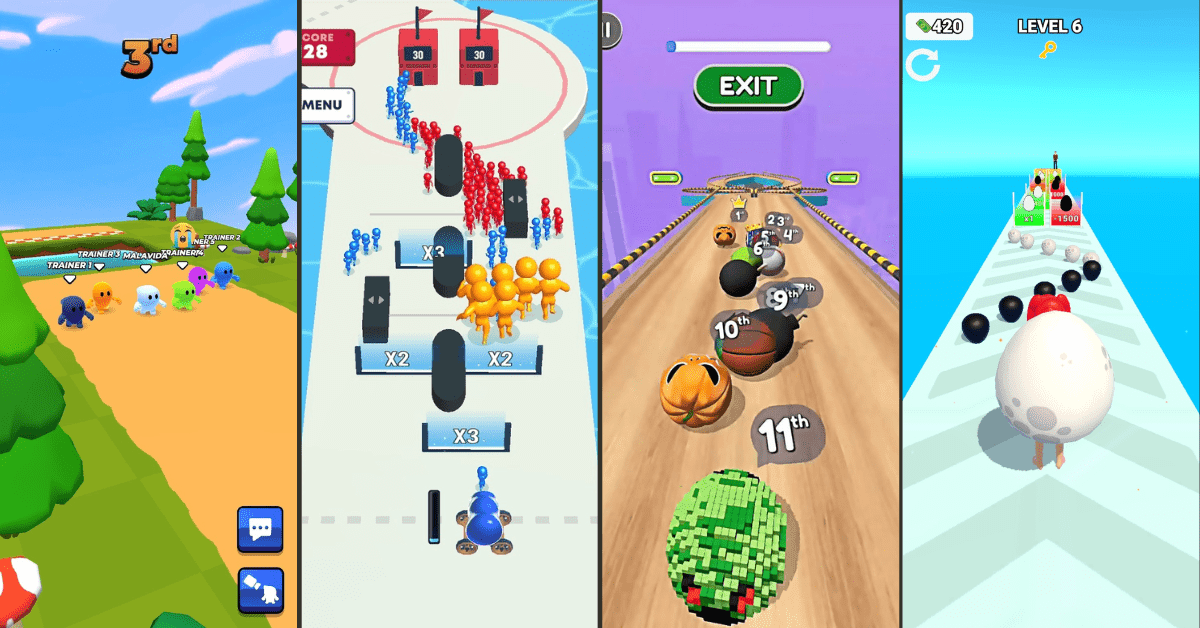
Leaderboards (High Heels) and asynchronous multiplayer (e.g., Hair Challenge’s style battles) turned solo play into communal experiences4. - ASMR & Tactile Feedback:
Hair Challenge and similar titles prioritized sensory satisfaction—zooming in on hair-cutting vibrations, sound effects, and visual “juiciness” to enhance engagement48.
This phase birthed the “hybrid-casual” model: simple entry points layered with light progression.
🌐 Phase 3: Modern Mechanics (2024–Present) – The Multiplayer & Web3 Shift
Today’s hyper-casual games are barely recognizable next to Flappy Bird. Key innovations include:
- Multiplayer Integration:
The upcoming Flappy Bird revival (2025) adds 99-player battle royale and basketball modes, transforming solitary play into social competition710. - NFT & Play-to-Earn Experiments:
Games like Snake.io now test tokenized skins, letting players trade cosmetic assets—though sustainability remains debated46. - Cross-Platform Play:
Cloud streaming enables mobile players to compete against console/PC users, expanding accessibility (e.g., Roblox’s mobile-console sync)4.
These shifts address retention while leveraging mobile’s connectivity—social friction replaces mechanical friction as the engagement driver.
🔮 The Future: AI, Ethics, and Endless Iteration
The next evolution hinges on two forces:
- AI-Personalization:
Dynamic difficulty adjustment and generative mechanics (e.g., personalized obstacle courses) could make each session feel unique9. - Ethical Design Pressures:
After Flappy Bird’s removal, studios now balance addictiveness with well-being features (e.g., session timers, “break” reminders)58.
The 2025 Flappy Bird reboot exemplifies this duality: retaining the original’s punishing pipes while adding cooperative modes to soften frustration310.
💎 Conclusion: The Paradox of Progress
From Flappy Bird’s ruthless minimalism to Hair Challenge’s sensory richness, hyper-casual mechanics have evolved to solve their greatest flaw: transient engagement. Yet, the core appeal remains unchanged—instant gratification. As hybrid mechanics and social features dominate, the genre’s future lies not in abandoning simplicity, but in wrapping it in layers that reward persistence without demanding complexity. The bird that started a revolution now flies into a future where casual no longer means shallow. 🚀